How your brand archetype resonates with your customer, and why it is important to walk the talk.
I recently did some work with a client whose brand archetype was The Caregiver. Now, choosing the Caregiver archetype takes courage in a dog-eat-dog world.
Why? Because, sadly, in this day and age, empathy, kindness and delivering for others can sometimes be construed as weakness.
Which segues neatly into my post for today.
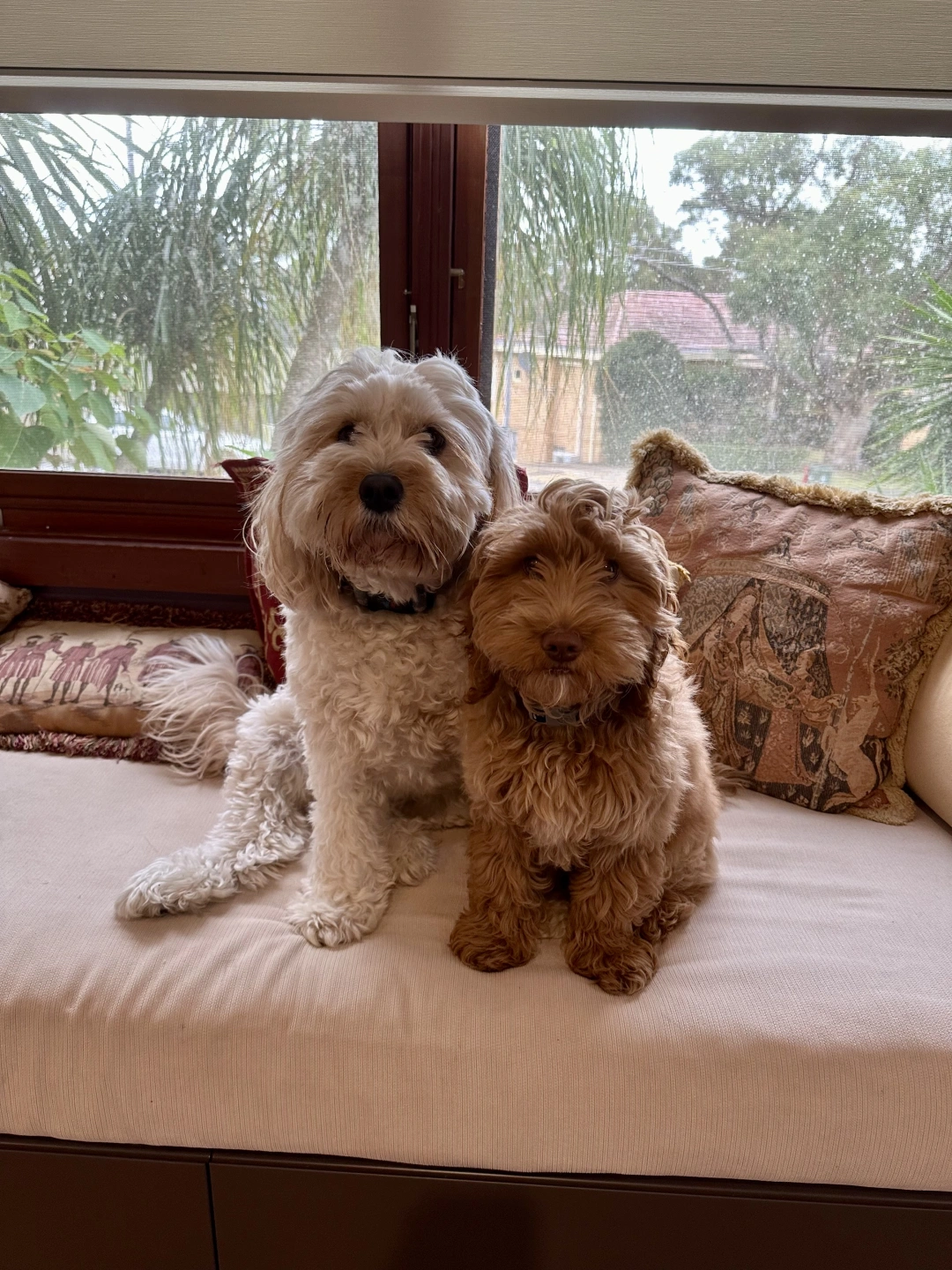
But first, let me explain the 'dog tax' I chose to illustrate this post.
The handsome duo pictured are Betty and Barney. They are our family pets; one was a COVID pup and one was a rescue. One is a princess and one is a punk.
And they are both irreplaceable members of our family.
Indeed, the (adult) children of my family suggest that the fur babies may be their parents’ favourites.
I will neither confirm nor deny this.
Anyone who has pets understands what I am talking about here. Anyone who sells to pet owners should seek to better understand this. Because herein lies the secret to success.
Why an unknown (to me) company named Chewy stopped me in my tracks.
I am based in Australia, so I had never heard of Chewy. But I came across a story online that caught my attention.
A woman had a prescription dog food subscription with Chewy. Sadly, her dog died and, three days later, her automatic dog food delivery arrived.
She called customer service to see if she could return the unopened food. Expecting to have to drop the food off somewhere, incur a delivery charge or provide details to prove the subscription should be cancelled. I would say she was probably braced for the usual taxing customer service returns experience.
Instead, Chewy refunded her on the spot and asked her to donate the dog food to a local animal shelter.
Then, two days later, they sent her a bouquet of flowers and a handwritten condolence card from the customer service agent.
Having received a handwritten card in the mail from our vet when our last pup passed away, I can attest to the favourable impression that left with us. So, I can only imagine how this bouquet was received from a pet food supplier, where you would expect the relationship to be much more distant.
At this point, my interest was piqued.
People were commenting on the social media post. Some shared hand-painted pictures that Chewy had sent them of their pets, after they had included photos of their pets in feedback to the company. All unexpected, all treasured.
What was coming across loud and clear was that people felt a real connection with this company.
So I thought I would check how this manifested in reviews across the usual sites (very high) and across Reddit, the default last check for anyone wanting to do a deep dive into a company's claims.
Whilst occasionally people talked about shipping issues or prescription problems, almost universally the feedback about the caregiving nature of the company was called out and praised.
It seemed that once you were a Chewy customer, you were a customer for life.
That level of stickiness is priceless in a subscription-model business.
A few things to note
Pet owners are loyal to the brands they trust - and this is a growing market.
In a global study conducted by ADM, 71% of pet owners surveyed indicated that they actively seek out products that support their pet’s longevity. Functional ingredients are increasingly becoming the backbone of these products, supporting health and wellness.
The dogfood market itself is growing at around 5% CAGR globally. The premium segment is the fastest-growing price category, projected to expand at a CAGR of 6.51% during 2026–2034.
As Fortune Business Insights puts it, rising dog ownership and the accelerating trend of pet humanisation are fundamentally transforming the nutritional landscape. Dogs are increasingly perceived as family members rather than companion animals, prompting owners to prioritise pet health, longevity and preventive nutrition in ways that closely mirror human dietary behaviour.
In other words, the relationship has changed.
Pets are family.
And when your customer believes that, they don't just want a product. They want a brand that understands what that means.
So what is the lesson?
Understand the emotional drivers of your customer base.
People will pay a premium for products and services that matter to them. But underneath that willingness to spend is something even more fundamental.
Everyone wants to be seen.
Everyone wants to feel valued.
Everyone wants to be part of a common experience.
And if your brand archetype is The Caregiver, then make sure every member of your team understands what that means.
More importantly, give them the power to deliver it.
Don't build a Caregiver brand and then give your customer service team 17 layers of red tape and approval before they can actually care for a customer.
If you want your brand to be empathetic, make empathy possible.
If you want your brand to be generous, give your people the authority to be generous.
If you want your brand to be a Caregiver, make sure your people can actually walk the talk.
Because your brand archetype isn't what you say you are.
It's what your customer experiences you to be.